Planning balanced meals can sometimes feel overwhelming, especially with busy schedules and a long list of food choices. However, creating nutritious and enjoyable meals doesn’t have to be stressful. With a few practical strategies, you can confidently plan meals that fuel your body and please your palate — all without the daily headache.
In this guide, we’ll explore simple ways to plan balanced meals, including understanding what balanced means, prepping smartly, and staying flexible.
What Does a Balanced Meal Mean?
A balanced meal provides a good mix of the key nutrients your body needs to function well. This typically includes:
– Proteins: Helps build and repair tissues (e.g., chicken, beans, tofu)
– Carbohydrates: Your body’s main energy source (e.g., whole grains, fruits, vegetables)
– Fats: Essential for brain health and energy (e.g., nuts, olive oil, avocados)
– Vitamins and Minerals: Found in fruits, vegetables, and dairy, these support overall health
– Fiber: Aids digestion and keeps you full longer (found in whole grains, fruits, and veggies)
A balanced plate often follows the “half plate” rule: half your plate filled with vegetables and fruits, one-quarter with lean protein, and one-quarter with whole grains.
Step 1: Start with a Weekly Meal Plan
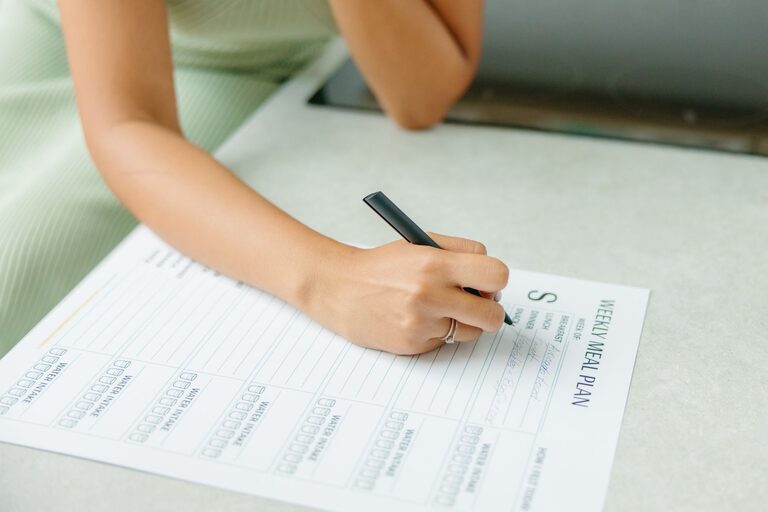
Creating a simple meal plan for the week can save time and prevent last-minute stress.
Benefits of Weekly Planning
– Saves money by avoiding impulse purchases
– Reduces food waste
– Helps maintain a healthy, balanced diet
– Frees up mental space during busy weekdays
How to Get Started
- **Choose Your Meal Themes:** Assign themes like “Meatless Monday” or “Fish Friday” to simplify choices.
- **Select Recipes:** Pick dishes that fit your schedule; quick recipes for busy days and more elaborate dishes when you have time.
- **Make a Shopping List:** Based on your recipes, write down all ingredients needed.
- **Shop Smart:** Stick to your list and shop once or twice a week to keep meals fresh.
Step 2: Keep Your Kitchen Stocked with Essentials
Having staple ingredients on hand makes it easier to pull together balanced meals without extra trips to the store.
Kitchen Staples to Have
– Proteins: Canned beans, lentils, eggs, frozen chicken breasts, tofu
– Grains: Brown rice, whole wheat pasta, quinoa, oats
– Vegetables: Fresh, frozen, or canned (low sodium)
– Fruits: Apples, bananas, berries (fresh or frozen)
– Healthy Fats: Olive oil, nuts, seeds
– Herbs and Spices: Garlic, basil, cumin, pepper, etc.
Stocking these basics means you can mix and match ingredients, reducing the pressure of deciding what to cook each day.
Step 3: Master Batch Cooking and Meal Prep
Batch cooking is preparing multiple servings of food at once, then storing portions for future meals.
Tips for Effective Meal Prep
– Cook in Bulk: Make large batches of grains or proteins like grilled chicken.
– Pre-Chop Veggies: Store them in containers for easy access.
– Use Leftovers Creatively: Turn roasted veggies into soups or salads.
– Invest in Good Containers: Durable, leak-proof containers help keep food fresh.
Batch cooking can free up time during the week and make sticking to your plan easier.
Step 4: Balance Your Plate at Each Meal
When it’s time to eat, balance doesn’t have to be complicated.
Simple Ways to Build a Balanced Plate
– Start with vegetables: Fill at least half your plate with colorful veggies or fruits.
– Add lean protein: Include a portion about the size of your palm.
– Include whole grains: Think of a fist-sized serving of rice, pasta, or bread.
– Add healthy fats: Sprinkle nuts or drizzle olive oil to enhance flavor and nutrition.
Remember, portion sizes can vary based on your energy needs, so listen to your body’s hunger and fullness cues.
Step 5: Stay Flexible and Enjoy Your Meals
While planning is helpful, it’s important to stay adaptable. Life can be unpredictable, and that’s okay.
– Allow for Changes: Swap meals or ingredients if something doesn’t fit your schedule or taste.
– Don’t Stress Over Perfection: Aim for progress, not perfection.
– Explore New Recipes: Keep things interesting by trying new meals occasionally.
– Make Mealtimes Enjoyable: Eat mindfully, savor your food, and share meals with family or friends when possible.
Additional Tips for Stress-Free Balanced Eating
– Use Meal Planning Apps: Tools can simplify shopping lists and recipe organization.
– Cook Once, Eat Twice: Make double portions and freeze half.
– Keep Breakfast Simple: Options like yogurt with fruit or oatmeal can start your day balanced without fuss.
– Hydrate: Drink plenty of water throughout the day to support digestion and overall health.
—
In Summary
Planning balanced meals doesn’t have to be a stress-inducing task. By understanding what makes a meal balanced, creating a weekly plan, keeping your kitchen stocked, batch cooking, and staying flexible, you can enjoy nutritious and tasty meals every day.
Start small, use these tips, and make mealtime a peaceful, nourishing part of your routine. Your body and mind will thank you!
About the Author